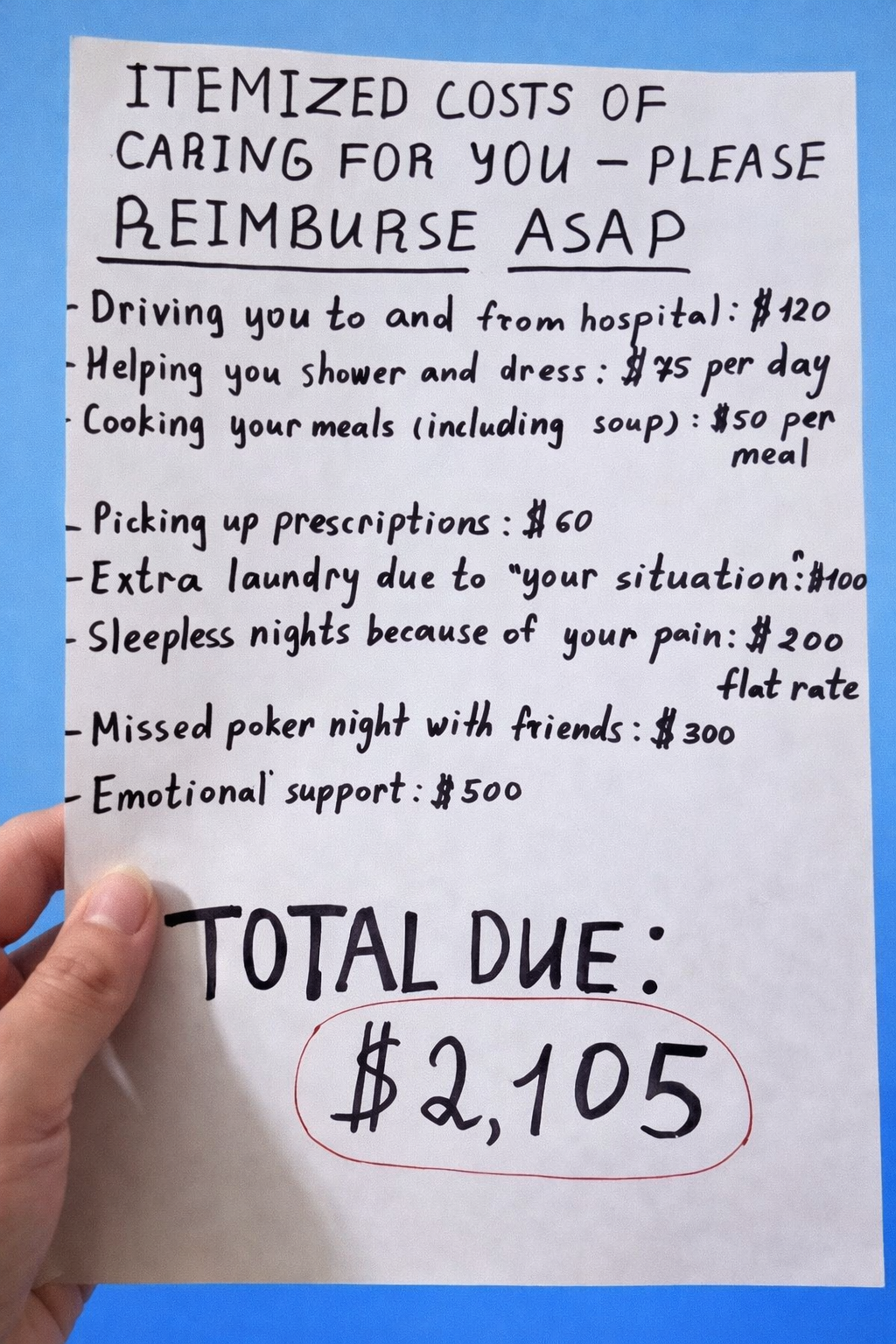
Three days after returning home from major surgery, I noticed something taped to our refrigerator that stopped me cold. It wasn’t a reminder or grocery list—it was a detailed note listing the “costs” my husband believed he had accumulated while helping me recover. Until that moment, I thought our seven-year marriage was built on quiet partnership, where care wasn’t counted. That list showed me we were living by very different definitions of support.
The surgery itself had already taken an emotional toll. What began as routine appointments quickly turned into painful decisions and a long recovery that forced me to grieve more than my health. I was grieving plans we once shared. Throughout it all, my husband assured me we were in it together, and I trusted him. That trust made the discovery even more painful. The note wasn’t really about money or effort—it revealed that my most vulnerable moments had been turned into a tally, as if care were a favor instead of a shared responsibility.
Rather than react in anger, I reflected. Over the years, I had contributed in countless unseen ways—managing daily life, offering emotional support, and making sacrifices that were never tracked or repaid. I calmly documented those contributions, not to compete, but to show the imbalance. When I shared it, the shift was immediate. He hadn’t realized how narrow his perspective had become.
The conversation that followed was difficult but necessary. He admitted stress and fear had shaped his thinking. Together, we recognized that marriage cannot survive when love is treated like an expense report. Care isn’t something you invoice, and keeping score quietly erodes what partnership is meant to be. That moment didn’t end our marriage—but it changed how we choose to show up for each other.