Some lives feel larger than life — filled with heartbreak, struggle, and triumph that seem almost cinematic. For one rock legend, pain didn’t just shape his story — it became his sound. Born on August 3, 1963, he grew up in a strict religious household that rejected modern medicine. Even as a child, he felt different — isolated from classmates and confused by rules he didn’t fully understand. Then came loss.
At 13, his father left without warning. Not long after, his mother became seriously ill with cancer but refused treatment due to her beliefs. He watched helplessly as her condition worsened. “We watched her wither to nothing,” he later recalled. After her death, he moved in with his older half-brother. With nowhere to place his grief, he turned to music.
Shy and withdrawn, he struggled to express himself. But through loud, aggressive guitar riffs, he found a voice. Music became his escape — a way to process anger, confusion, and pain. In the early 1980s, a newspaper ad connected him with drummer Lars Ulrich. Together, they built something new — heavier, rawer, more honest. That partnership became Metallica.
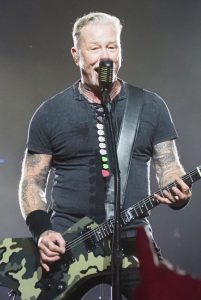
Albums like Master of Puppets and The Black Album didn’t just achieve success — they redefined heavy metal. But behind the fame, struggles remained. Years of pressure and unresolved trauma led to addiction, culminating in rehab in 2001. Instead of hiding, he chose to confront it. More than four decades later, James Hetfield still stands — proof that even the darkest pain can be transformed into something powerful.