During excavation for a new house foundation, construction workers make an unexpected discovery: a heavy, rusted metal object buried deep beneath the soil. At first glance, it appears to be nothing more than an old piece of scrap metal left behind over the years. However, its unusual shape catches their attention and makes them wonder what it might have been used for.
The object is noticeably different from ordinary discarded metal. Its weight, shape, and apparent construction suggest that it may have served a specific purpose long before the property became a construction site. Rather than immediately throwing it away, the discovery raises questions about its history and connection to the land.
After examining it more closely, the piece appears similar to antique cast-iron property boundary markers. These objects were once used to identify property lines and indicate where one piece of land ended and another began. They were particularly useful before modern surveying equipment and techniques became widely available.
In earlier times, clearly marking property boundaries was important for landowners, farmers, and communities. Durable metal markers provided a more permanent way to identify dividing lines than temporary wooden stakes or other easily damaged signs. Cast iron was a practical material because it was heavy and could withstand years of exposure to the elements.
Over time, many of these old markers disappeared as properties changed ownership, buildings were constructed, and land was redeveloped. Others became buried beneath layers of soil, making them difficult to discover. This may explain why an object like this could remain hidden underground for generations before construction work finally brought it to the surface.
Some surviving examples have attracted interest from collectors and local history enthusiasts. Their potential value depends on several factors, including their age, physical condition, rarity, and documented origin. A marker connected to a particular historical property or surveying system may be especially interesting to researchers and collectors.
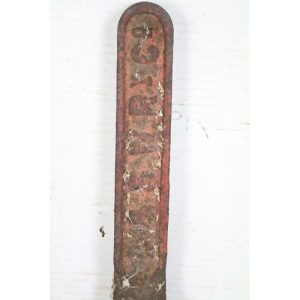
Although the object’s resemblance to an antique boundary marker is intriguing, its exact identity cannot be confirmed from appearance alone. A closer examination by someone familiar with historical surveying equipment, antique ironwork, or local property records could help determine what it actually is. Its original location may also provide useful clues about the history of the land.
What initially appeared to be worthless construction debris could therefore turn out to be a small but fascinating piece of local history. Instead of simply discarding it, preserving the object and investigating its origins could reveal how the property was once divided and who may have owned the surrounding land generations ago.